

MyXrayDose cloud service
Optimise clinical image quality and patient dose, at your fingertips
The tools you need to optimise clinical image quality and patient x-ray dose, simply and easily.

Achieving the best for your patients
Connect to the MyXrayDose cloud and see which x-ray techniques need fine-tuning to maintain diagnostic accuracy.
Identify opportunities to reduce patient dose without compromising diagnostic performance.
Achieving the best for your radiology practice
MyXrayDose was developed for the working radiology service and integrates seamlessly into normal workflows.
Once set up, the service guides you to techniques that may need improving, and the analytical tools on the website let you deep-dive into your data to find the root causes of imaging problems.
Continuously working for you
Image quality and dose metrics are collected or calculated automatically for every x-ray image through a standard DICOM connection. The data is sent to the MyXrayDose cloud for analysis, giving you in-depth information when and where you need it. Additional patient size and imaging technique information helps identify likely causes on your path to optimised x-ray imaging.

Enabling effective communication
Many groups influence radiology imaging techniques, each with its own skills and vocabulary, which creates communication barriers. Including quantitative measurements alongside real clinical images bridges that gap, so clinicians, radiographers, physicists and engineers can more easily reach the common goal: the best outcome for patients.
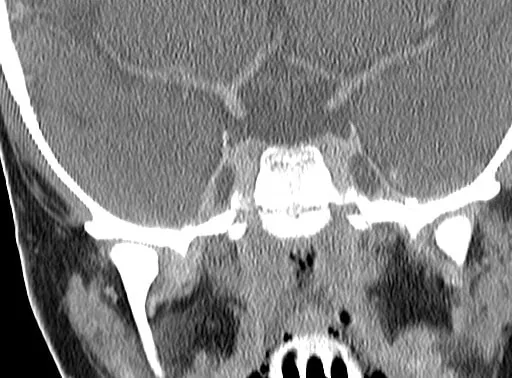
Extending visual perception
Consistent imaging across radiology depends on describing and communicating image quality requirements accurately, and the limits of visual perception make that hard. Noise can be seen in this CT image, but how much is there, and what are its characteristics?
MyXrayDose analyses and measures image noise and other image quality metrics to extend visual perception, adding accuracy and precision when setting clinical image quality objectives.
Everything in one service

Puts diagnostic image quality at the centre of patient x-ray dose optimisation.

Patient size, image quality, patient dose and technique data collected for a complete data set.

Data collected and coded for every modality, study type, series type and patient size.

Comprehensive statistics on clinical image quality, dose and technique for every patient size, study and series type.

From regulatory dose reporting to individual modality technique reports, and everything in between.

Set and forget: automated performance and dose reports emailed to whoever needs to see them.

Objective, vendor-neutral analysis, reporting and advice.

Dose and technique data collected from DICOM RDSR, DICOM image headers, screen scrapes and MPPS messages.

From global overviews to specific detail: data mining tools and dashboards show the big picture alongside the detail.
Patient size as the x-ray beam sees it
The most relevant measure of patient size is not height, weight or age, but the amount of tissue the x-ray beam passes through. Results from large-scale Monte Carlo simulations of broad-beam x-ray transmission are built into MyXrayDose, so patient tissue thickness is quantified automatically and accurately.
Giving you a global view
From the data held in each country we calculate anonymised, aggregated statistics and publish them to a global server. This growing pool of data, for individual series, all patient sizes and any modality, is provided back to you through the website.

White paper
Imaging Correctly
Using quantitative tools to manage diagnostic performance.
See MyXrayDose with your own data
Talk to our medical physicists about monitoring image quality and dose across your fleet.